Science Spotlights
& Explorer Insights
Welcome to the Science Spotlights & Explorer Insights Blog — your home for axolotl facts, conservation news, creative STEM activities, and behind-the-scenes peeks into the Axolotl Universe.
Whether you’re a parent, teacher, student, or lifelong learner, you’ll find posts designed to spark curiosity, fuel creativity, and inspire conservation.
Categories Section
🐠 Axolotl Facts → Fun facts, biology, cultural history.
🌱 Conservation → Protecting habitats, sustainability, eco-tips.
🔬 STEM for Kids → Activities, experiments, puzzles.
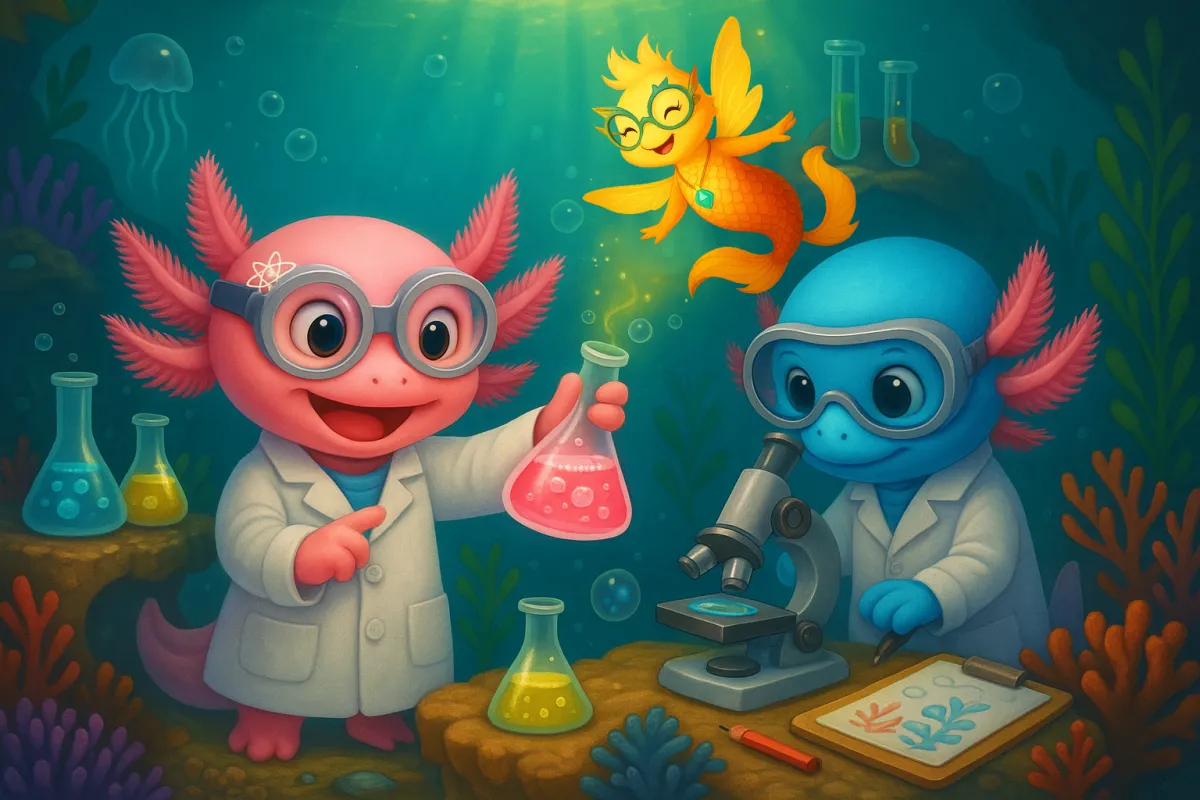
🎨 Behind the Scenes → Creative process, story development, and updates from Lotty, Finn & Glowria.
Not sure where to start? Try our most popular posts!
Blog
Based on resources from National Geographic and Conservation International
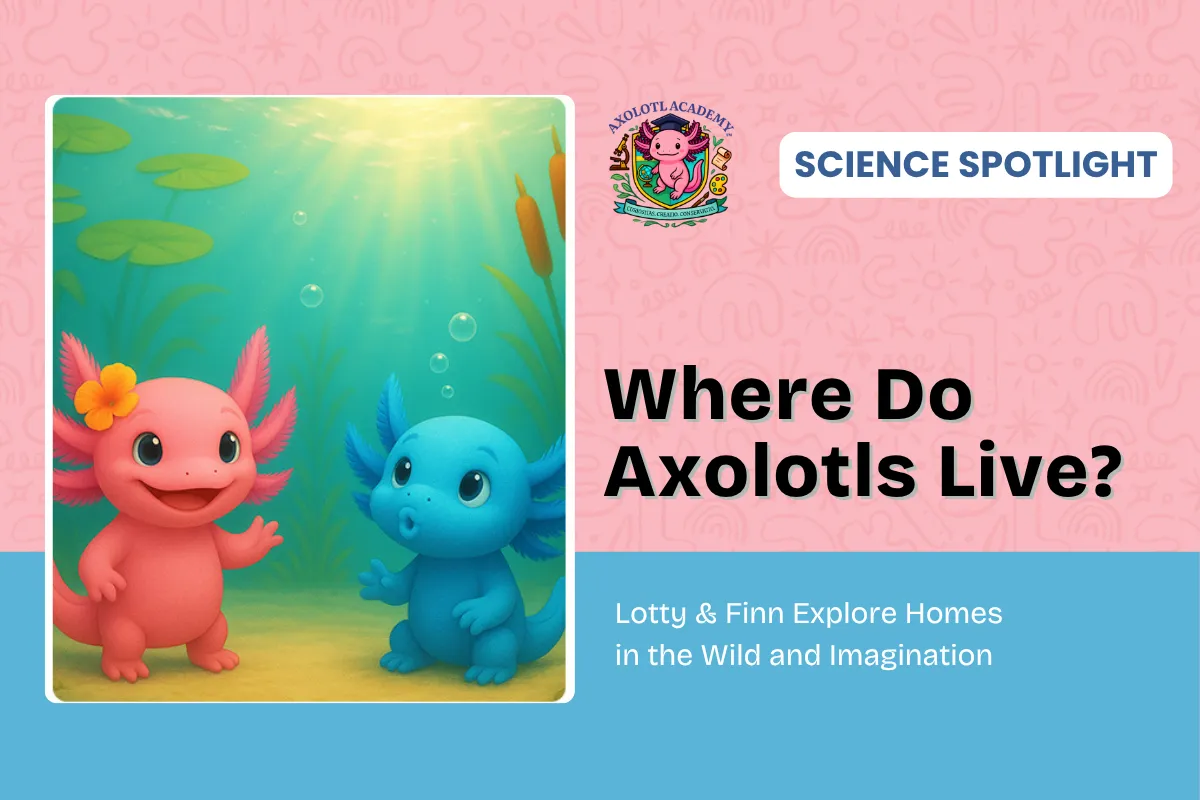
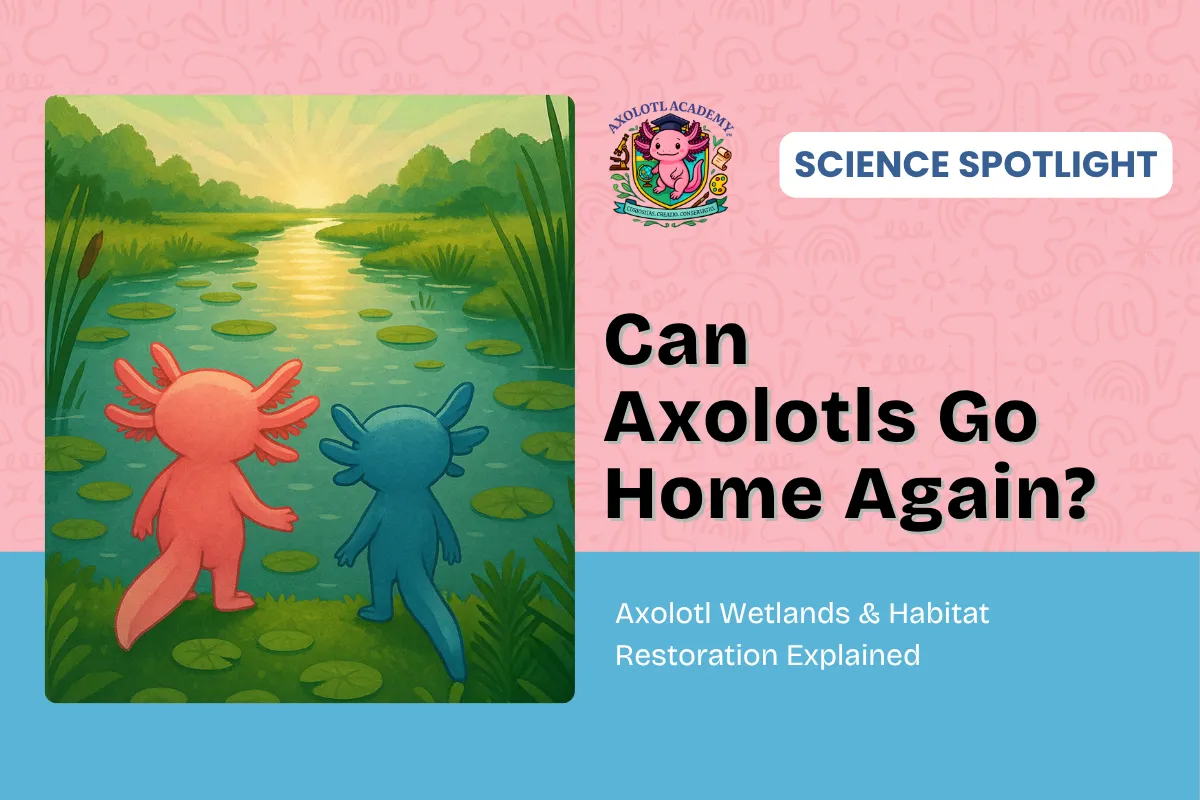
Axolotls are critically endangered. Pollution, invasive fish, and habitat loss have reduced their wild populations dramatically. Conservation projects in Xochimilco are working to restore wetlands, using traditional chinampas (floating gardens) to give axolotls safe places to live again.
Key Takeaway: Axolotls live only in a fragile corner of Mexico City’s waterways. Protecting and restoring these wetlands is the key to their survival.
For more details, read more here:
Based on resources from Britannica and National Geographic
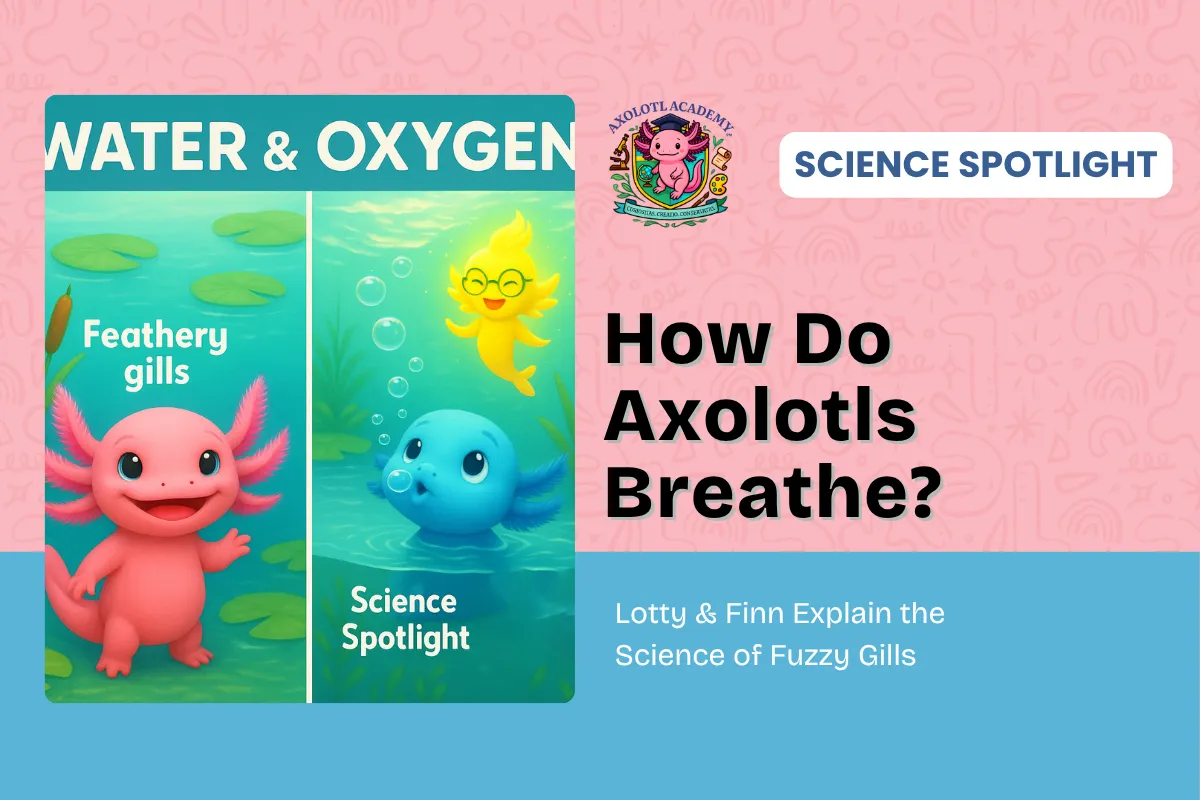
Axolotls are neotenic salamanders, which means they keep their juvenile traits—like gills—into adulthood.
This unusual feature allows them to remain fully aquatic, unlike most salamanders that lose their gills and move to land.
Key Takeaway: Axolotls breathe through gills, skin, and lungs, but their fuzzy external gills are the superstar adaptation that lets them live underwater their whole lives.
For more details, read more here:
Based on “Movement Ecology of Captive-Bred Axolotls in Restored and Artificial Wetlands” (PLOS One, 2024)
Scientists studied how captive-bred axolotls behaved when released into two different environments:
🌱 Restored wetlands (chinampas): Axolotls explored naturally, using plants and mud for cover.
🏗️ Artificial ponds: Axolotls hid more and showed less movement.
Key Takeaway: Axolotls can adapt, but they thrive best in habitats that feel like home—with plants, clean water, and shelter.
For more details, read more here:
Keep Your Explorer Spirit Alive!
Sign up to receive the latest Science Spotlights, Explorer activities, and free resources straight to your inbox.
Sign Up and Become an Official Axolotl Explorer!
👋 Hello, Explorers!
We’re Lotty, Finn, and Glowria, and we’re so glad you’ve found your way to the Academy.
This is where curiosity sparks discovery, creativity fuels imagination, and conservation inspires action.
Here, you’ll uncover fun facts, solve mysteries, and learn how even small steps can make a big difference.
From the ancient lakes of Xochimilco to galaxies far away, we’ll guide you through a universe of wonder.
So pick up your pencils, open your mind, and dive in — because adventure is everywhere when you’re part of the Axolotl Academy.
✨ With bubbles of excitement,
Lotty, Finn & Glowria